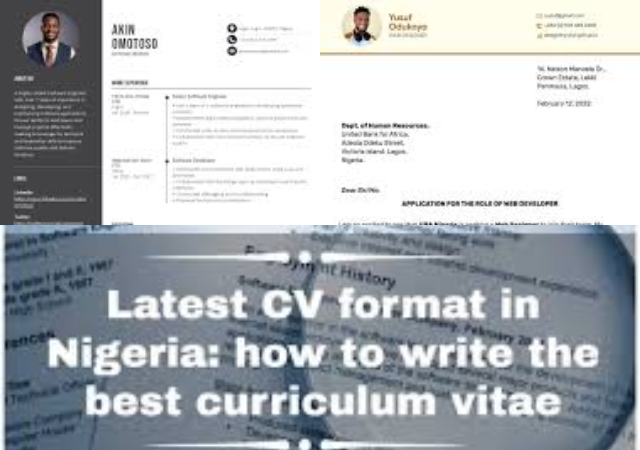
Creating a CV that stands out in Nigeria can be challenging, especially with so many applicants competing for the same role A well structured CV not only showcases your experience but also ensures you pass through digital filters like Applicant Tracking Systems (ATS) Here’s a detailed guide to crafting a CV that can land you your dream job.
what a CV is?
A CV (Curriculum Vitae) is a written document that summarizes your education, work experience, skills, and achievements Its main purpose is to show potential employers why you are the right person for a job.
Think of it as a personal advertisement for yourself: it highlights what you can do, what you have accomplished, and the value you can bring to a company.
Key points :
- Shows your professional history: jobs, education, certifications
- Highlights achievements : results and successes, not just duties
- Tailored for job applications: helps you stand out to recruiters and ATS systems
- Professional first impression : clean, clear, and concise
- In simple terms: a CV is your ticket to getting an interview by showing employers, quickly and clearly, why they should hire you.
Key Components of a Winning Nigerian CV
When writing your CV, focus on clarity, relevance, and simplicity Your CV should ideally be 1 to 2 pages long and organized in reverse chronological order (your latest job first) Here’s what to include:
1 Header
Include your basic contact information:
- Full Name
- Phone Number
- Email Address
- Location (City, State)
- LinkedIn Profile (if available)
Keep this section clean and professional Avoid unnecessary personal details like religion, marital status, or age.
2 Professional Summary
- This is a short 3 to 4 sentence paragraph that highlights:
- Your most important skills and qualifications
- Key achievements
- Career goals
Think of this as your “hook” it should grab the recruiter’s attention and make them want to read more.
3 Work Experience
List your jobs in reverse order, starting with your current or most recent position Use bullet points to describe achievements rather than duties Include numbers wherever possible, e.g., “Increased sales by 20% in 6 months.”
Focus on results and measurable outcomes This shows recruiters your impact rather than just your responsibilities.
4 Education
Start with your highest qualification first Include:
- University or college attended
- Degree or certification earned
- Relevant courses or projects
- National Youth Service Corps (NYSC) details if applicable
5 Skills
Include both technical skills (software, tools, industry specific knowledge) and soft skills (communication, teamwork, problem solving) Tailor this section to match the job description to improve your chances with ATS.
6 Certifications and Training
- Add any relevant professional certifications, such as:
- ICAN (Institute of Chartered Accountants of Nigeria)
- CIPM (Chartered Institute of Personnel Management)
- PMP (Project Management Professional)
This demonstrates your commitment to professional growth.
7 References
It’s standard to write: “References available upon request” This saves space and keeps your CV concise.
Tips for Success in Nigeria
Writing a good CV is not just about listing experience Here are some practical tips:
- Tailor Every CV: Customize your CV for each application to match the job description.
- Pass the ATS: Many companies in Nigeria use Applicant Tracking Systems Include keywords from the job posting and avoid complex formatting.
- Keep it Concise: Stick to 1to 2 pages to maintain the recruiter’s interest.
- Proofread: Spelling or grammar mistakes can harm your credibility.
Use PDF Format: Unless a Word document is requested, send your CV as a PDF to preserve formatting.
What to Avoid
To make a professional impression, avoid including:
- Marital status
- Religion
- Age
- Personal photos (unless specifically requested)
Also, avoid long paragraphs and cluttered designs A clean, simple, and well organized CV always stands out.
Frequently Asked Questions (FAQs) About Writing a CV in Nigeria
What is a CV?
ANS: A CV, or Curriculum Vitae, is a document that outlines your education, work experience, skills, and achievements It is used to apply for jobs and shows employers why you are qualified Think of it as your professional story on paper.
How long should a CV be in Nigeria?
ANS: A typical CV in Nigeria should be 1to 2 pages long Keep it concise and focus on your most relevant experience and achievements.
Should I include personal details like age or marital status?
ANS: No Avoid unnecessary personal information such as age, marital status, religion, or a photo unless the employer specifically requests it Focus on your skills and experience.
What is reverse chronological order?
ANS: Reverse chronological order means listing your most recent job first, followed by previous positions This helps recruiters quickly see your latest experience and achievements.
How can I make my CV ATS friendly?
Many Nigerian companies use Applicant Tracking Systems (ATS) to filter CVs To pass these systems:
Include keywords from the job description
- Avoid fancy formatting or graphics
- Use standard headings like Work Experience, Education, Skills
Should I include achievements or duties in my CV?
ANS: Focus on achievements, not just duties Employers want to see what you accomplished, preferably with numbers or measurable results For example: “Increased sales by 20% in six months” is better than “Responsible for sales.”
What file format should I send my CV in?
ANS: Send your CV as a PDF unless the employer specifically requests a Word document PDFs keep your formatting intact and look professional.
Do I need references on my CV?
You don’t need to list full references Simply write: “References available upon request” This saves space and is standard practice.
Leave a Reply